
ROBOTICS & HIGH-SPEED MOTORS
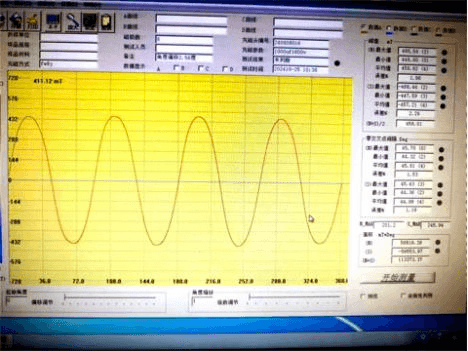
Mainrich manufactures high-performance sintered magnetic rings for humanoid robot joints and high-speed motors. Compared to conventional radially oriented rings that can produce a saddle-shaped air-gap flux density profile, our radial multi-pole rings use curved internal grain orientation to create a sinusoidal surface field and concentrate flux at the working surface—delivering higher torque and smoother rotation.
+20–30%
Surface Flux vs Tiles
< 1% variance
Flux Consistency
Sinusoidal
Waveform Output
4 / 6 / 8+
Pole Configurations
Standard radially oriented rings align magnetic grains in straight spokes, which can produce a saddle-shaped air-gap flux density profile (a mid-pole dip and higher harmonic content). Our radial multi-pole rings use advanced orientation molding where the grains curve between poles—improving surface flux utilization and waveform smoothness.
Flux Concentration: Curved internal grain orientation concentrates magnetic energy toward the working surface, achieving 20–30% higher surface flux versus traditional tile magnets (application-dependent).
Natural Sine Wave: The continuous grain orientation produces a naturally smooth sinusoidal waveform. This matches the electrical input of high-end servo motors—reducing cogging torque, vibration, and noise without relying on complex mechanical compensation.
From high-precision robotics to cost-effective appliances, we match the magnet technology to your motor's requirements.
Best for Robotics
The flagship solution. A single sintered ring with multi-pole orientation (curved grain). Delivers the highest precision, excellent balance, and sine-wave performance. Ideal for humanoid robot joints and coreless motors.
Best for High Speed
Magnets sliced into thin layers and bonded with insulation. Essential for high-RPM motors (drones, vacuums, EVs) to reduce eddy-current losses and prevent overheating.
Best for General Use
Arc segments bonded into a ring, often reinforced with a sleeve. A proven, scalable solution when size, cost, or production flexibility matter—commonly used in appliance motors and selected robotics designs.
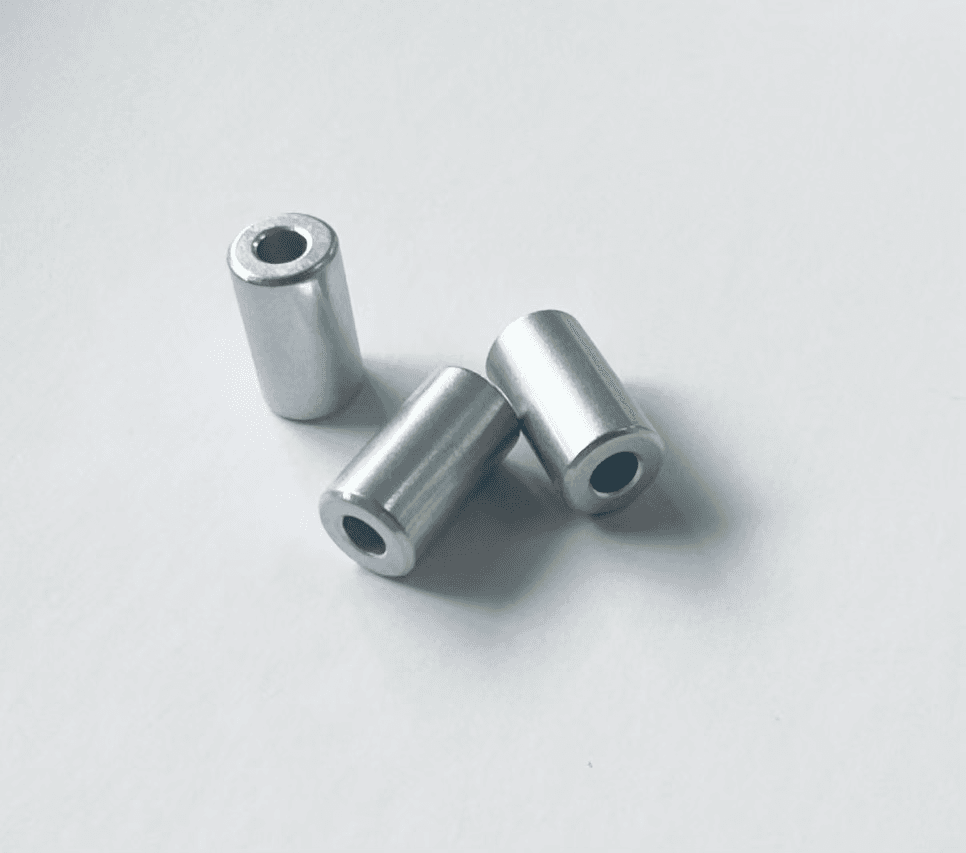
Our premium offering for servo motors and robotics. Curved grain orientation supports a sinusoidal surface field with tight consistency (target <1% variance, size-dependent). This improves torque smoothness and reduces vibration.
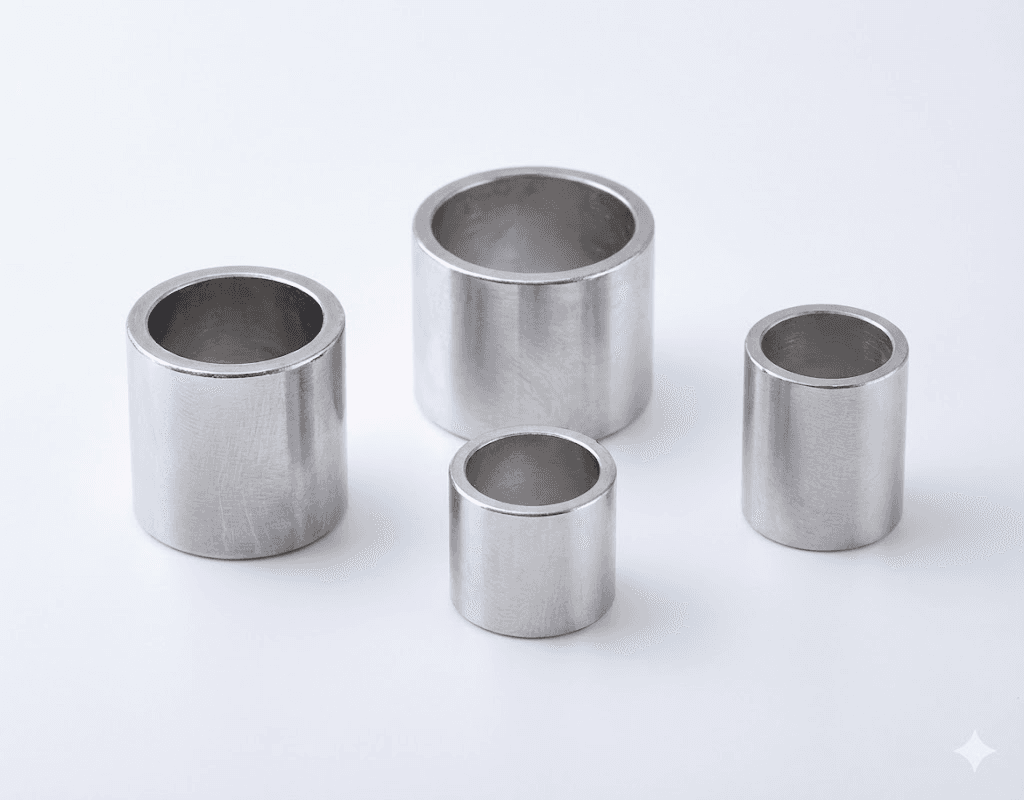
A standard NdFeB radial ring for general motor applications. Radially oriented rings use straight grain orientation and are typically selected when a conventional radial field profile is acceptable and cost efficiency matters.
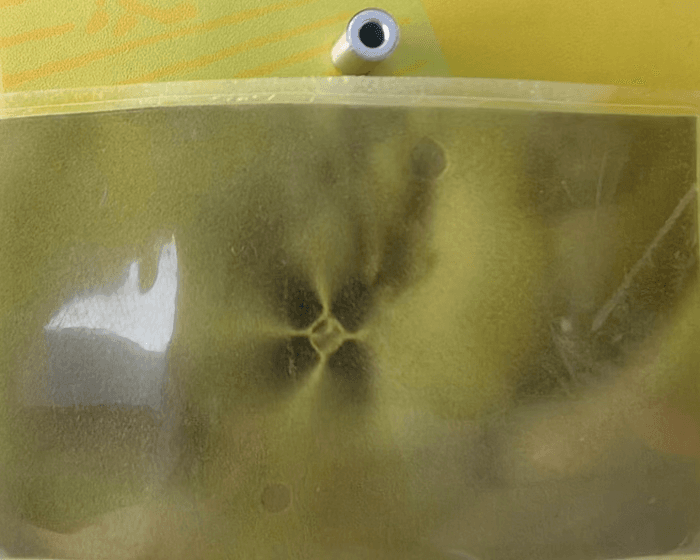
Small-diameter magnet rings for coreless (hollow cup) motors used in high-speed designs (typically >10,000 rpm) and robotics joints/actuators. Supports single-pole, multi-pole straight magnetization, and multi-pole skew magnetization.
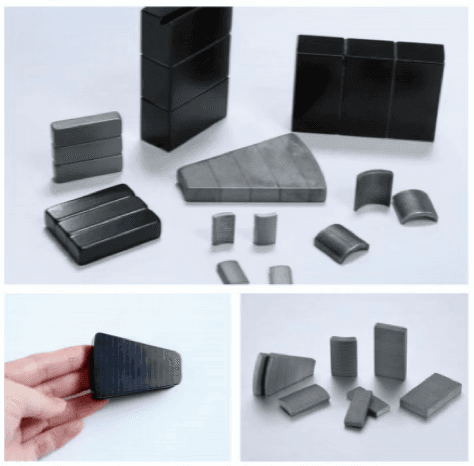
The solution for eddy-current suppression. For motors running at very high speeds, we slice the magnet into thin insulated layers to reduce electrical conductivity—helping prevent self-heating and demagnetization.
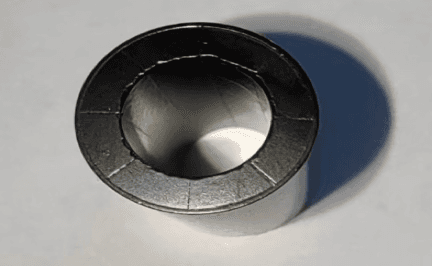
Arc segments bonded into a ring for flexible sizing and cost-effective production. We precision-match segments and can reinforce with stainless steel or carbon fiber sleeves for strength at speed.
Robotics applications demand tight tolerances to prevent vibration. Our process reduces geometric center deviation—helping align magnetic and mechanical centers.
±0.02mm
Inner Bore (ID)
0.05mm
Concentricity
±0.03mm
Perpendicularity
<1%
Flux Consistency
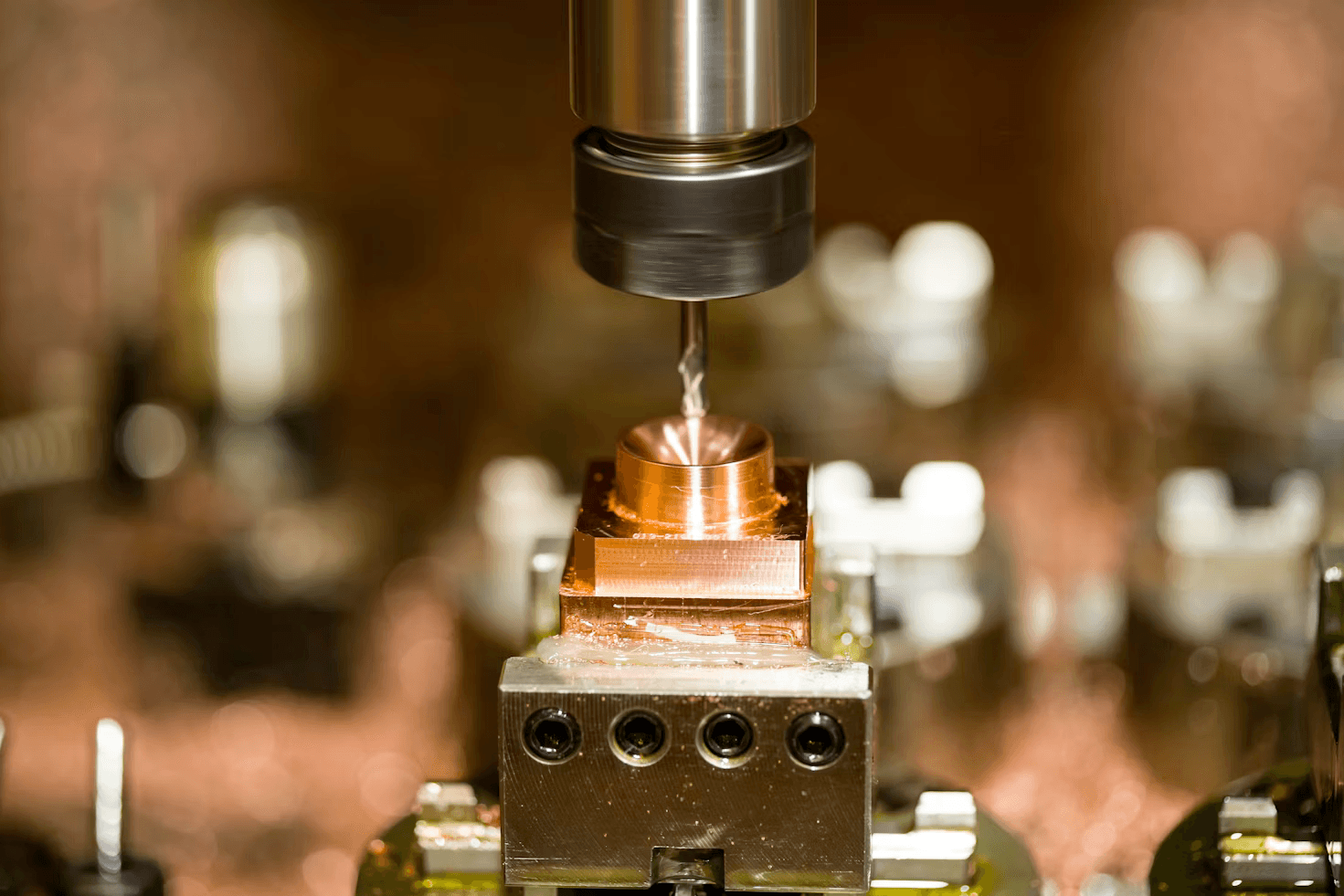
Robotics and servo applications often need higher-coercivity NdFeB grades—commonly M or Hclass. Traditional alloying uses heavy rare earths (Dy/Tb) throughout the whole magnet, which increases cost and supply risk.
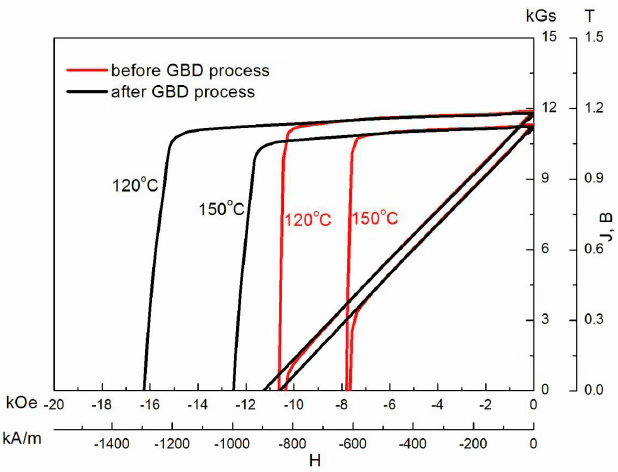
We use GBD to diffuse Dy/Tb only along the grain boundaries. This increases coercivity (Hcj) and thermal stability while using 50–70% less heavy rare earth material than traditional alloying (application-dependent).
By significantly reducing the use of heavy rare earth materials like Dy and Tb, this technology lowers our magnets' cost exposure and supply chain risk arising from the volatility and potential restrictions on these elements.
50-70%
Reduced material cost
2.9µm
High thermal stability
Share your motor dimensions (OD/ID/Height) and pole requirements. We'll analyze feasibility for radial multi-pole production.